Before silver became a symbol of purity and gold a sign of power, there was copper.
Copper is one of the first metals humanity learned to work. More than 8,000 years ago, it was shaped into tools, ritual objects, and jewellery. It was not merely a new material — it marked a turning point. A metal that helped humankind step out of the Stone Age and begin reshaping the world by its own hand.
Today, we often associate luxury with precious metals. Yet much of our entire metal culture rests upon copper.
Copper – The Metal of the Sun.
In ancient Egypt, copper was associated with the sun god Ra. The sun was the source of life, and copper, with its warm reddish tone, reflected that vitality on earth. A metal resembling the sun symbolically carried the meaning of creation and life force.
Kuigi kuld sümboliseeris jumalikkust ja igavikku, oli vask see metall, mis võimaldas tsivilisatsioonil toimida.
Egypt itself had limited copper deposits. Much of it was brought from the Sinai Peninsula and other distant regions. This meant copper was not simply “cheap.”
In early periods — before bronze became widespread — copper was a crucial resource. Technologically, it was essential. Without copper, it would not have been possible to produce the tools required to build pyramids, temples, and tombs.
Archaeological findings show that copper was used for storing and purifying water. Modern science confirms that copper has antibacterial properties, capable of destroying certain microorganisms on its surface. From this emerged the belief that copper could “cleanse” or heal its wearer.
In many cultures, copper bracelets and amulets were worn close to the body. It was believed that a metal which conducts heat and electricity so efficiently might also help balance a person’s internal energy.
Whether taken symbolically or literally is for each individual to decide. What remains clear is that copper was never merely decorative — it carried meaning.
Copper and Bronze in Ancient Estonia
Closer to home, the story becomes more personal.
Eesti aladel algas pronksiaeg umbes 1800 eKr. Pronks on vase ja tina sulam. See tähendab, et meie ehtekultuuri juured on otseselt seotud vasega.
Estonia has no natural deposits of copper or tin. These metals arrived through trade routes and were valuable. They were not everyday materials — they were imported and precious.
Ancient Estonian jewellery — brooches, neck rings, spiral ornaments — was predominantly made of bronze. Silver became more significant later, particularly during the Viking Age.
Seega võib öelda: meie ehtekultuur ei sündinud hõbedast, vaid vase sulamitest.
Pronks oli toonilt soe, vastupidav. Ta ei olnud külm ega steriilne. Ta elas koos kandjaga.
Copper and Brass – What Is the Difference?
Copper and brass are often confused.
Copper is a pure metal — reddish in colour, soft, highly malleable, and an excellent conductor of heat and electricity. Over time, it oxidises, first darkening and eventually developing a green patina. This transformation is natural.
Messing on vase ja tsingi sulam. Ta on värvuselt kollane, tugevam ja vastupidavam kui puhas vask.
Messing oksüdeerub, kuid on kaunis ehtematerjal, mille ilu peegeldub tema kuldsetel poleerpindadel. Messing on ehtekunstis hinnatud just oma töötlusomaduste ja värvi poolest, sest väliselt sarnaneb see kullale.
If silver reflects light in a bright and cool manner, copper and brass carry warmth and glow.
Copper is not a cheaper version of something else. It is a different aesthetic and sensory choice.
A Metal That Changes.
It is true that copper and brass — as well as silver — do not remain unchanged over time. They respond to air, moisture, and touch. Some may see this as a flaw. I see life in it.
Patina is not decay. It is the trace of time upon a surface.
This capacity for transformation gives these metals a deeper dimension. They are not static. They live with the wearer, respond to the environment, and gather story. Perhaps that is why, throughout history, these metals have been worn on the body — not merely as adornment, but as carriers of meaning.
Copper Today – A Strategic Metal.
Copper remains at the centre of the modern world.
Electrification, renewable energy, technology — all depend on copper. In recent years, its price has risen, and discussions of potential future shortages have emerged.
The metal that once led humanity out of the Stone Age continues to stand at the core of technological progress.
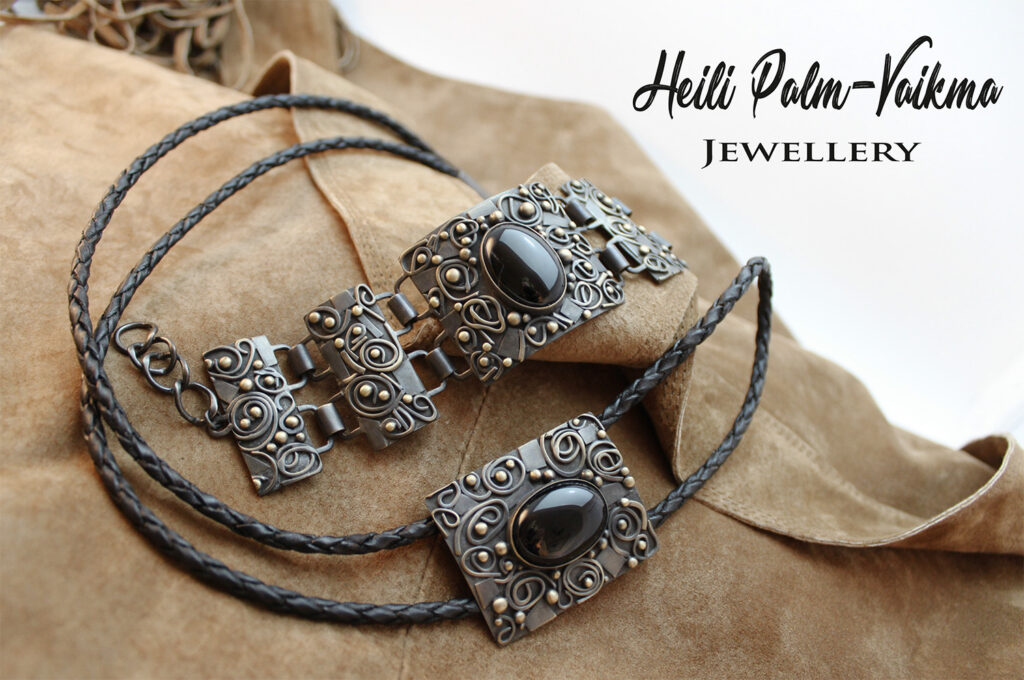
Why Wear Copper and Brass?
If the roots of our jewellery culture lie in copper alloys, why should only precious metals be considered “authentic”?
The value of copper and brass does not rest in rarity, but in history and meaning.
These metals carry:
– the symbolism of the sun
– the history of earth and craftsmanship
– the roots of our ancestral and jewellery traditions
– the beauty of transformation
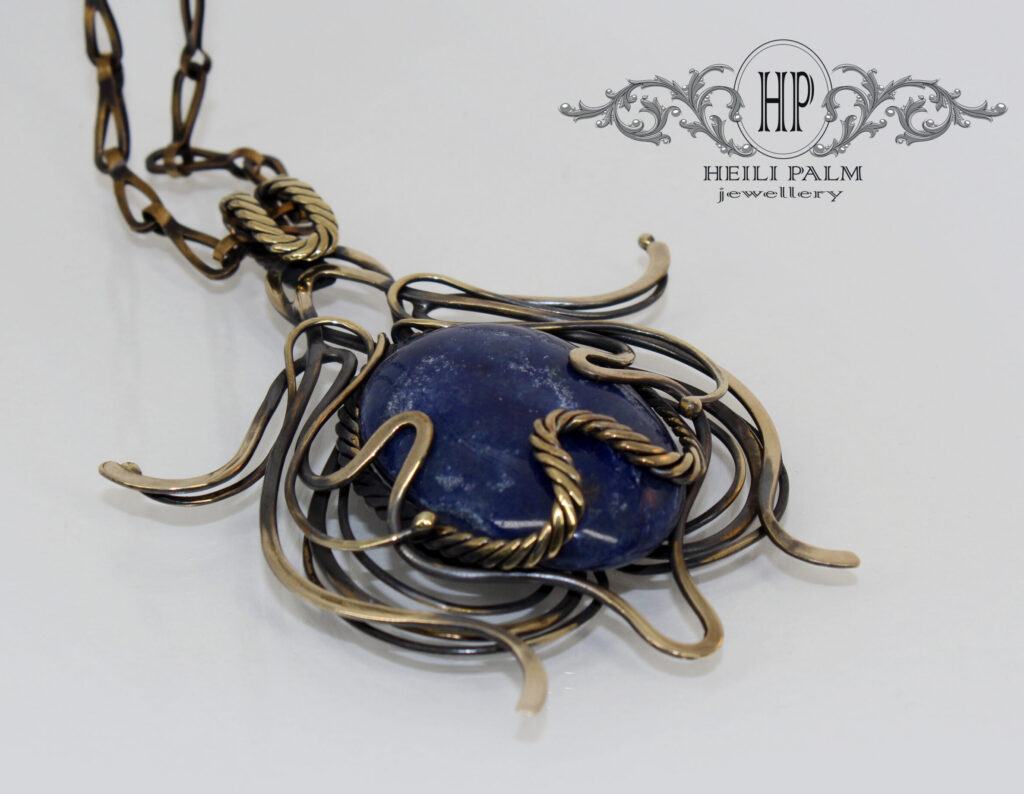
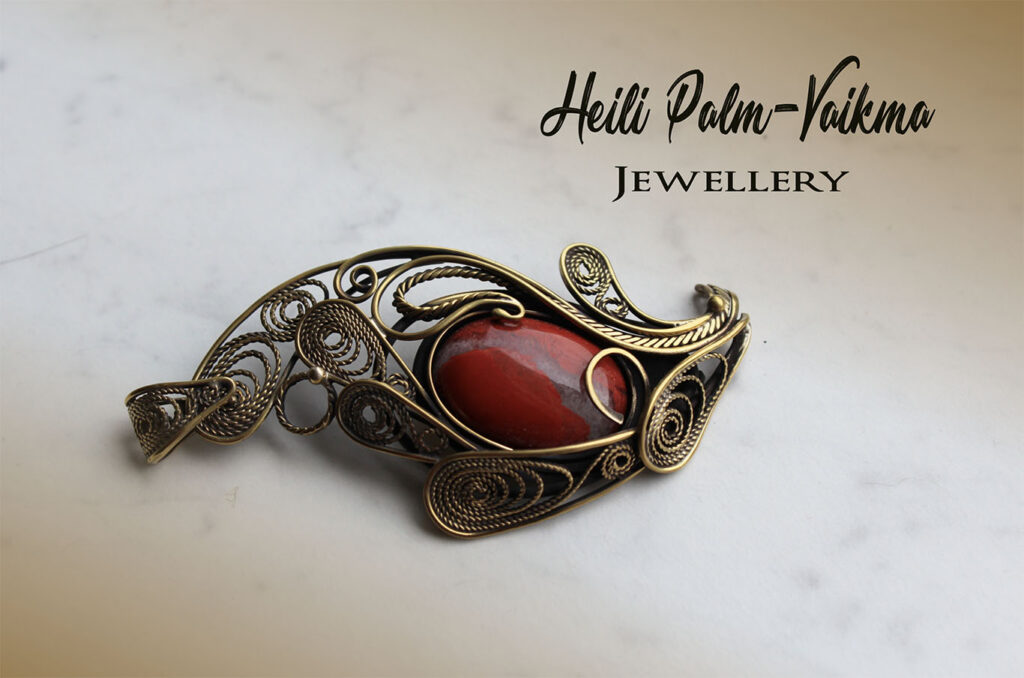
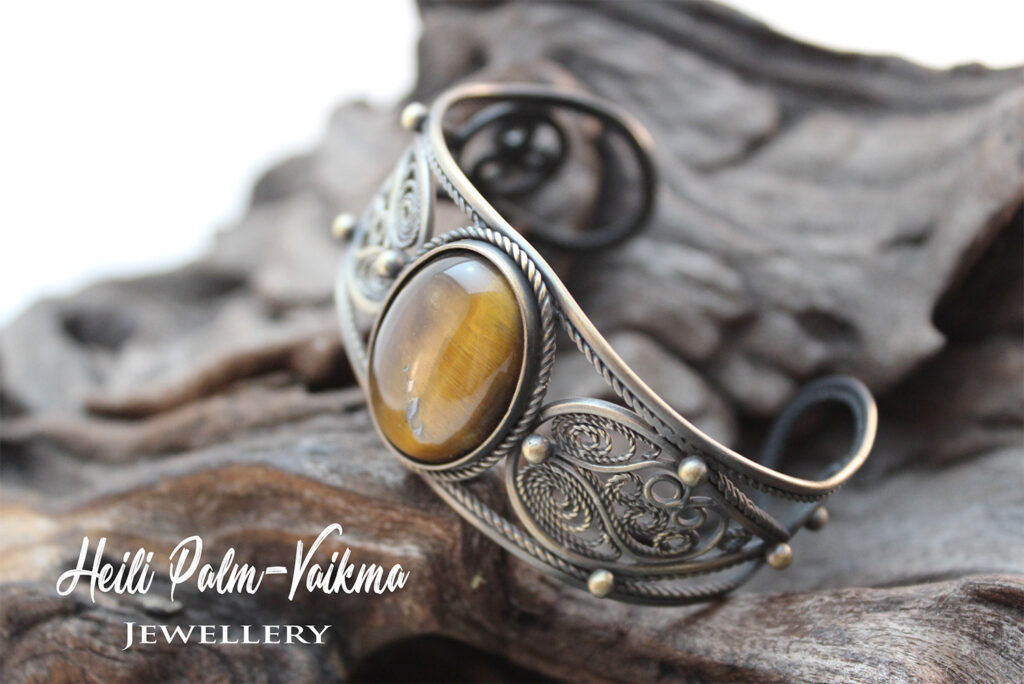
Filigree, accustomed to shimmering in silver, can equally live in brass. And sometimes it is precisely that warmer tone which reveals a different kind of light.
The Metal That Remembers.
Copper has stood beside humanity for thousands of years. It has witnessed the rise and fall of civilisations.
It has been tool, weapon, ritual object, and ornament. It has conducted heat, current, and history.
When I choose copper or brass, I am not merely choosing a different coloured metal.
I am choosing a material with memory.
The memory of the sun and the earth. The memory of our culture.
Written by Heili Palm, jewellery artist