A quick glimpse of my workbench!
A slow craft and the making of form
Filigree is a technique that requires time. It is not something that can be rushed, nor is it a technique that can be fully replaced by machines. This is what makes filigree more than just a method of making jewellery. It is a slow craft, where every detail is created consciously and by hand.
In my own work, in Heili Palm Jewellery pieces, filigree is one of the central techniques. It is a way of creating forms that are both delicate and structured – almost as if drawn.
Filigree as a time-intensive technique
A filigree piece is not made quickly. It consists of dozens, sometimes hundreds, of small elements, each crafted individually and then carefully assembled.
Each fine wire, every spiral, and every joint is a separate step in the process. This means that creating even a small piece of jewellery can take a considerable amount of time, even when the form appears visually light and simple.
It is precisely this abundance of detail and level of precision that gives filigree its characteristic lightness.
Making the wire and annealing
Filigree begins with the preparation of the wire. The metal – usually silver – is drawn through specialised tools to make it progressively finer. With each draw, the wire becomes harder and less flexible.
To allow the metal to be worked further, it must be repeatedly annealed. Annealing involves heating the metal and then cooling it, restoring its softness and workability.
This process is repeated many times, and only then can the wires be twisted together and shaped.
Twisting and shaping the wire
Filigraanehete valmistamisel kasutatakse keerutatud või keermestatud traati. Mina kasutan oma töödes hetkel rohkem keerutraati kus kaks või enam peent traati keerutatakse omavahel kokku.
Seejärel traat tavaliselt valtsitakse, millest vormitakse spiraale, kaari, taimemotiive ja täiteelemente.
These elements are often very small, and their placement requires great precision.
- Here you can get a brief glimpse of how this process looks:
Making filigree wire and jewellery
Placing and soldering the details
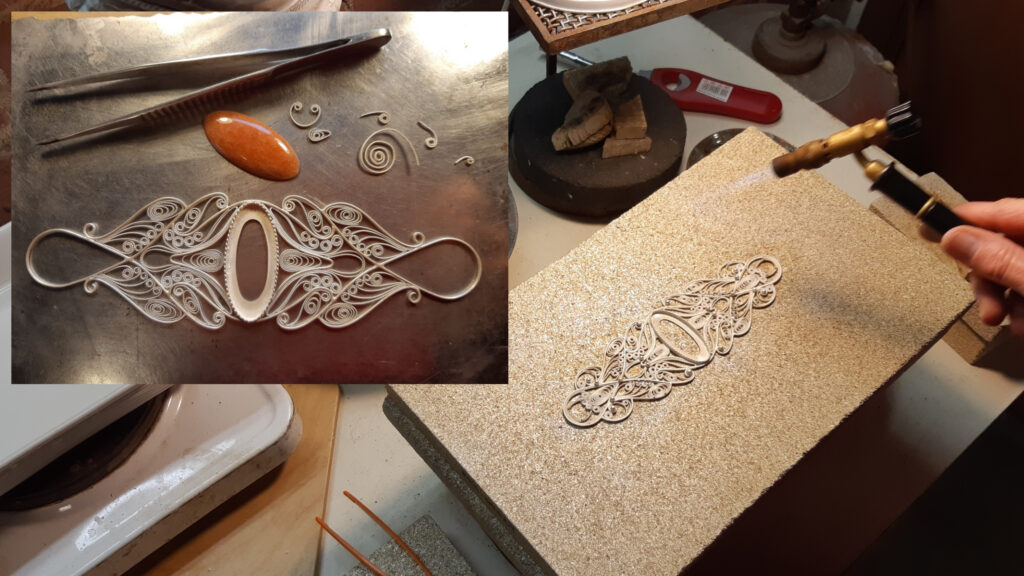
Once all the elements are prepared, one of the most delicate stages begins – placing and soldering them.
In filigree, the elements cannot simply be “glued” together – they must be soldered. Today, soldering is done using a gas torch with a controlled flame, different grades of solder, and a flux.
At the same time, the overall form of the pattern must be preserved.
This means that during the process, the elements must not shift, the heat must be precisely controlled, and the structure must not collapse.
This is work that requires experience and a very refined sense of control.
Surface enrichment of silver and “frosting”
In filigree jewellery, the surface of the metal is also important. One technique used is the enrichment of the silver surface, which makes it whiter and more matte. This is also known as frosting.
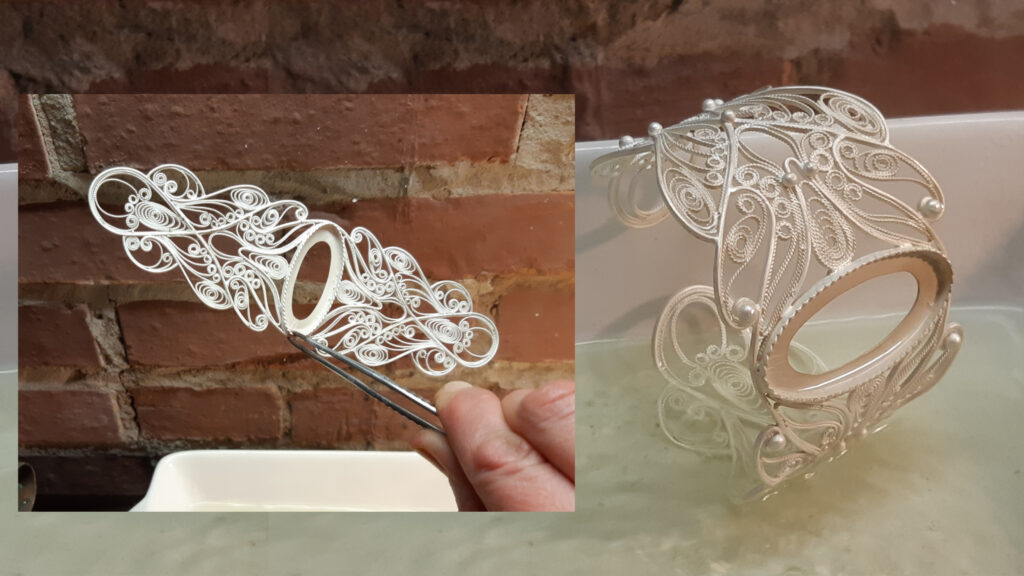
The process is based on repeatedly heating and cleaning the metal. The piece is heated and then placed in a cleaning solution, where some of the copper compounds are removed from the surface, leaving behind pure silver.
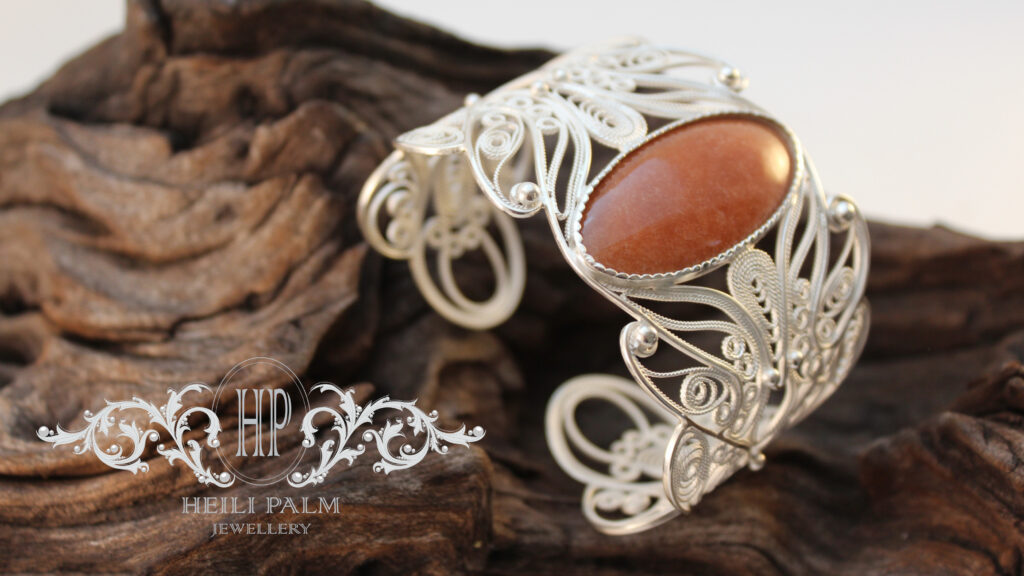
This is not done just a few times. The process is often repeated dozens of times—sometimes thirty or more. With each cycle, the surface becomes cleaner and the silver layer becomes richer.
- If a frosted piece is properly cared for, its surface will retain its light appearance for a long time.
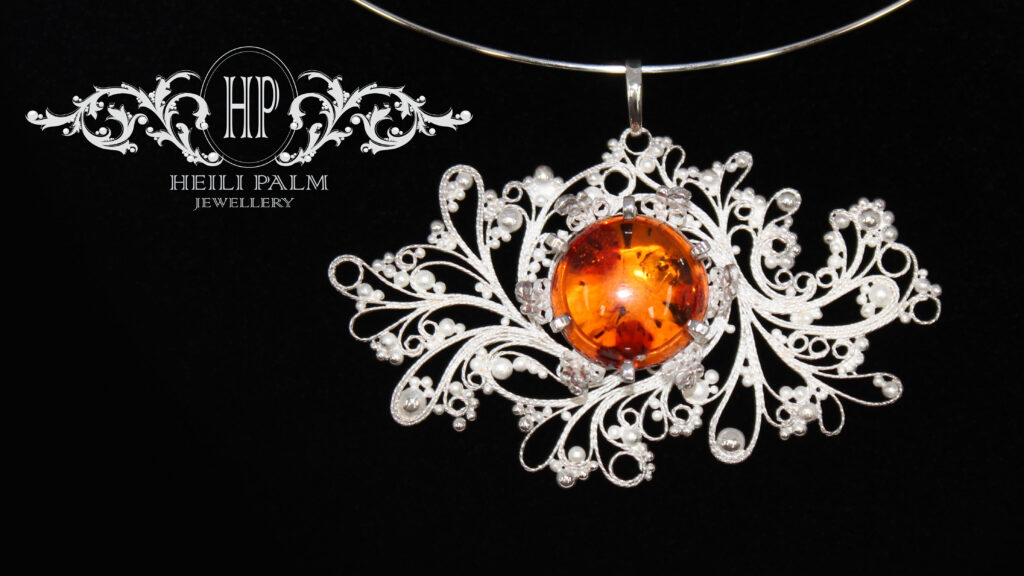
A silver brooch from the “Glacies Filigra” collection – a signature piece by Heili Palm
Oxidation and the use of contrast
Another important finishing technique is oxidation. It is used to darken the surface of the silver, especially in the deeper areas.
When the piece is then lightly polished, the raised areas remain lighter while the deeper parts stay dark. This creates a contrast that brings out the filigree pattern particularly well.
Filigree and natural forms in my work
In my work, filigree is closely connected to natural motifs. Leaves, shoots, and organic forms work beautifully with this technique. Filigree allows these forms to be expressed in a very delicate and highly detailed way.
I often combine filigree with other techniques to create a balance between lightness and structure.
- The making of filigree can also be seen on my YouTube channel. For example, a video of a hair ornament/ hair comb being created:
A hair comb from the “Glacies Filigra” collection
- You can also follow me on Facebook. Here are a few more examples from the “Glacies Filigra” collection:
Pieces from the “Glacies Filigra” collection
Pieces from the “Glacies Filigra” collection (2)
Why filigree is considered a luxury technique
Filigree is not luxurious only in its appearance. It is also luxurious in the time it takes to create.
It is a slow process that requires patience. The details are small, the process is multi-layered, and the result demands great precision. This kind of work cannot be rushed, as its quality would suffer.
For this reason, a filigree piece is not simply a beautiful object. It is a work that brings together time, skill, and a deep dedication to the craft.
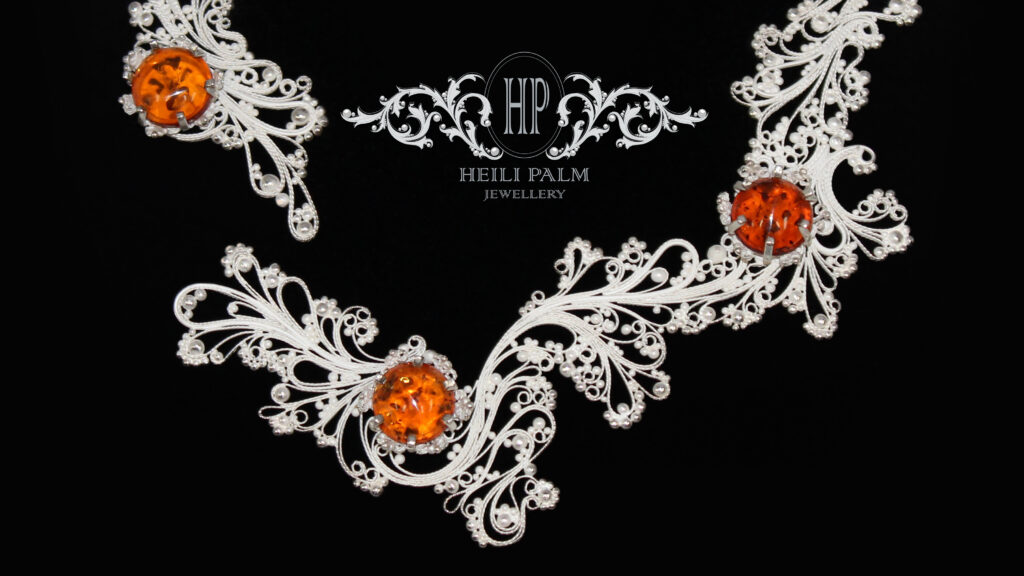
- You are warmly invited to visit my online shop:
- Custom orders are also welcome.
In closing
Filigree, for me, is never just a technique. It is a process with its own rhythm, and a craft with its own pace.
Each piece is created detail by detail, and each one carries both craftsmanship and a quiet sense of luxury.
This is what makes filigree something whose value lies not only in how it looks, but also in how it is made.
Written by Heili Palm, jewellery artist